Inside a Compounding Pharmacy: The Step-by-Step Process of Making Personalized Medications
Understanding the science, safety, and precision behind custom-tailored therapies.
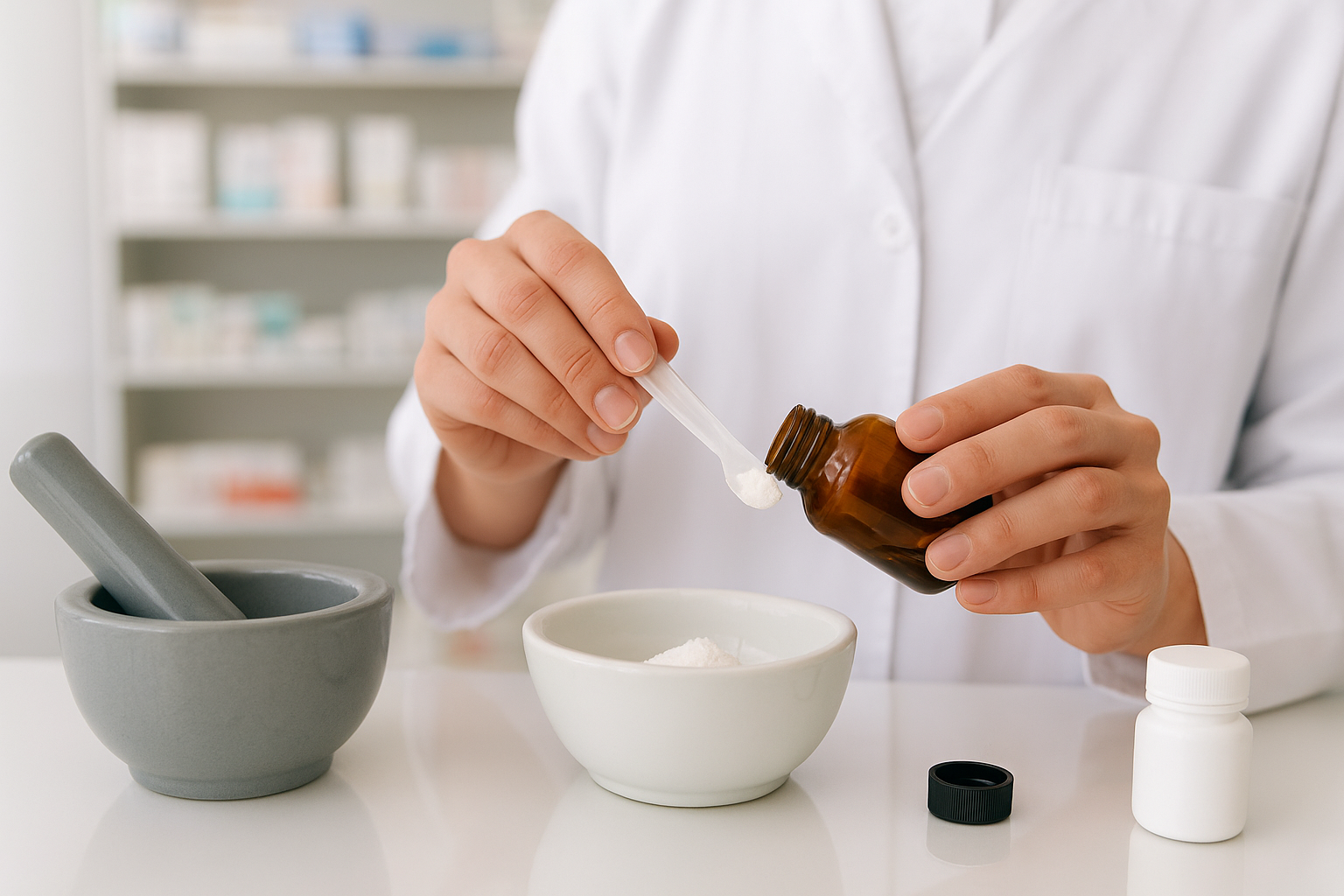
Most people only know the regular community pharmacy where you buy a packaged drug. But behind the scenes, there is another branch of pharmacy built for patients who need something different, a specialized facility where every step is intentional, every ingredient is measured, and every formula is made to solve a unique problem that regular, mass-produced drugs cannot address. This is the compounding pharmacy process.
A compounding pharmacy is a specialized laboratory where licensed pharmacists and technicians create bespoke medications tailored to a specific patient’s needs. This process ensures patients receive the exact drug they need, in the precise format they require, filling gaps where “one-size-fits-all” does not work.
What Does Compounding Achieve?
Compounding means creating a medication in a form, strength, or combination that does not exist on the commercial market. It exists because patients are different.
Compounding provides essential flexibility, covering scenarios such as:
-
Custom Dosage: Changing a dosage strength that is unavailable (e.g., instead of ) for precise titration.
-
Allergen Removal: Removing inactive ingredients like dyes, lactose, or preservatives for sensitive or allergic patients (e.g., a diabetic patient reacting to a preservative).
-
Combination Therapy: Combining two or more compatible active ingredients into a single, convenient dose (e.g., an all-in-one ophthalmic drop).
-
Unique Delivery Form: Switching a drug into a cream, liquid suspension, troche, or specialized sterile solution for patients who cannot swallow pills (e.g., a child or elderly patient).
-
Addressing Shortages: Recreating discontinued medications or providing access during nationwide drug supply shortages.
The Compounding Pharmacy Process: A 6-Step Rigorous Workflow
Below is a complete breakdown of the meticulous quality standards and procedures that occur when a provider sends a request to a modern compounding pharmacy like Vivmeds.
Step 1: The Personalized Prescription and Review
Every compounded medication begins with a prescription that specifies the API, strength, and dosage form. The pharmacist’s first duty is rigorous verification:
-
Safety Check: Reviewing the active ingredients, required strength, potential drug interactions, and patient allergies/restrictions.
-
Formula Development: If the request is novel, the pharmacist builds or adjusts a validated formula, calculating exact weights and concentrations, confirming ingredient compatibility, and reviewing scientific stability data.
-
Prescriber Contact: If any aspect of the formula or safety profile requires clarification, the pharmacist contacts the prescriber before moving forward.
Step 2: Quality Assurance & Ingredient Sourcing
The integrity of the final product hinges on the quality of its raw materials.
-
Sourcing Vetting: Ingredients are sourced exclusively from FDA-registered and approved suppliers.
-
Verification: Each raw chemical receives a Certificate of Analysis (CoA) to verify its purity, strength, and quality.
-
Excipients: Inactive ingredients (e.g., base cream, filler, flavor) are chosen to ensure the medication is stable, safe, and palatable, while specifically avoiding patient-specific allergens.
Step 3: Controlling the Sterile Environment and Equipment
The physical workspace is strictly controlled based on the medication type, emphasizing USP Compliance—the national quality standard.
Step 4: Precise Preparation and Formulation
This stage utilizes specialized equipment and techniques to create the medicine.
-
Measurement: Ingredients are measured using high-precision analytical balances (accurate down to the milligram) and calibrated measuring devices.
-
Mixing Techniques: Depending on the dosage form, technicians use:
-
Trituration: Grinding solids into fine powders.
-
Geometric Dilution: Mixing compounds in a specific sequence to ensure uniform distribution.
-
Unguators: Specialized mixers for smooth cream and gel blending.
-
-
Sterilization: For USP compounds, the final product may undergo terminal sterilization (e.g., heat or filtration) before being sealed in its final container within the sterile environment.
Step 5: Final Quality Assurance (QA) and Verification
Quality control is the most critical step and often involves multiple checks and balances.
-
Internal Verification: The compounding pharmacist performs a final check against the batch record, confirming the correct ingredients, concentrations, and amounts were used.
-
Analytical Testing: For complex or high-risk sterile compounds, a sample is sent to an independent, third-party laboratory for potency, sterility, and endotoxin testing. This verifies the strength and safety.
-
Documentation: Every step of the compounding pharmacy process is meticulously recorded in the batch record, creating a permanent, auditable trail.
Step 6: Dispensing, Labeling, and Counseling
Once QA is complete, the medication is prepared for the patient.
-
Labeling: Labels include the patient name, directions, strength, storage instructions, and a Beyond-Use Date (BUD)—the final date the medication should be used (based on stability testing).
-
Packaging: Packaging is designed to protect stability and purity, especially for cold-chain products (like GLP-1 injectables or ophthalmic solutions).
-
Counseling: A pharmacist provides personalized counseling on proper administration, storage, and potential side effects of the customized medication.
Who Needs Compounded Medications?
Compounding fills essential roles across nearly every medical specialty:
The Vivmeds Advantage
A compounding pharmacy is a place where science, precision, and patient-specific care come together. It fills the gap between what big manufacturers produce and what real people truly need.
By adhering to the highest standards of USP and compliance, Vivmeds ensures that the compounding pharmacy process consistently yields safe, effective, and high-quality personalized therapies.
We don’t just follow a workflow; we partner with providers to create precise solutions that lead to better patient outcomes.