What Is a Compounding Pharmacy? How It Works & Benefits
The Rise of Personalized Medicine
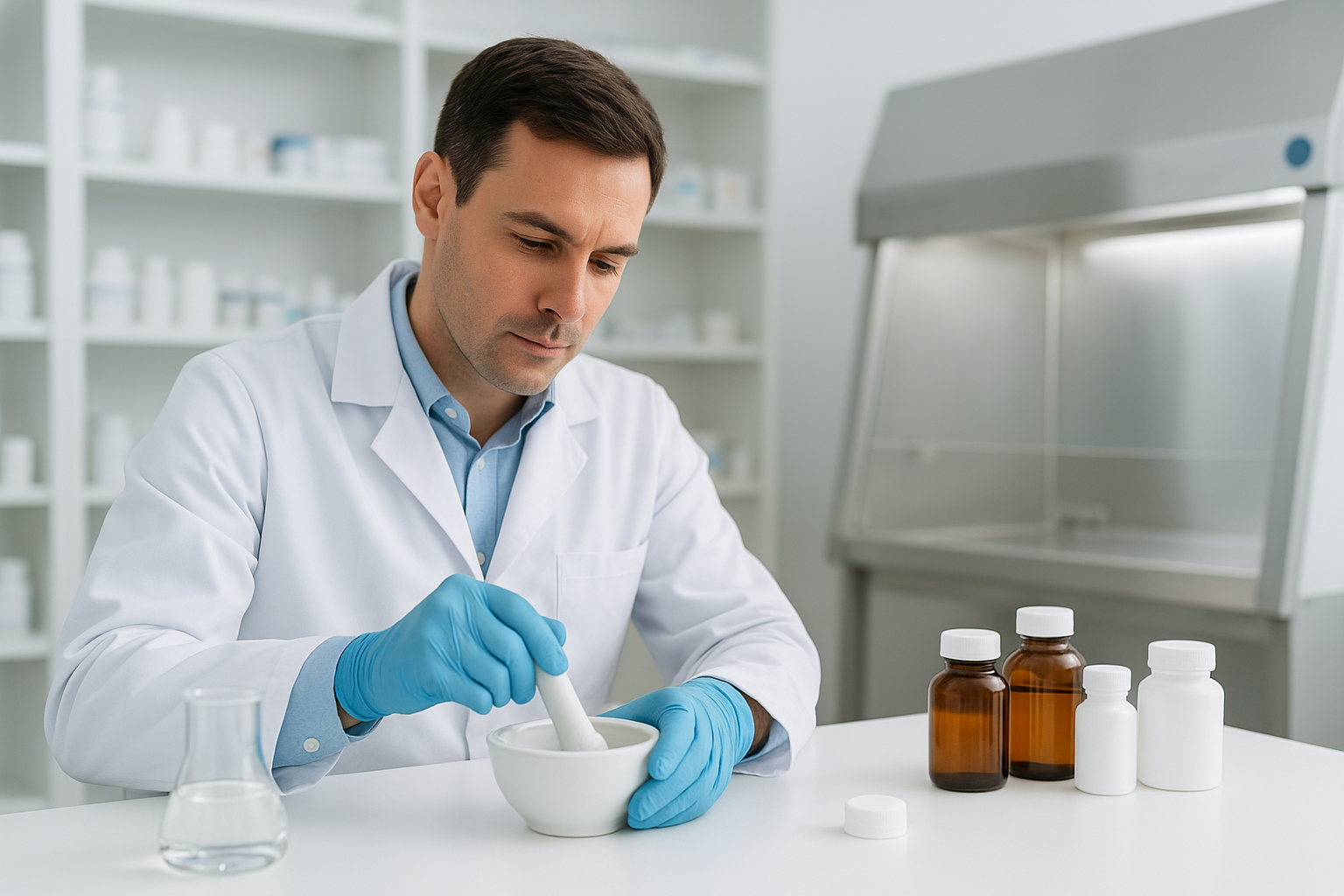
Why Standard Medications Aren’t Always Enough
Compounding isn’t a modern fad; it’s a return to the historic roots of pharmacy, which involved preparing medicines from scratch. Today, compounding is necessary when a patient’s medical needs cannot be met by an FDA-approved, commercially available drug.
Here are the Five Key Reasons Medication Must Be Compounded:
1. Unique Dosing Requirements
A patient (often a child, a pet, or someone undergoing hormone therapy) may require a dose strength that is not manufactured commercially (e.g., 7.5mg instead of 5mg or 10mg).
2. Allergy or Sensitivity Issues
Commercial pills often contain inactive fillers, dyes, lactose, or preservatives that can trigger severe allergic reactions. A compounding pharmacist can remove the problematic ingredient.
3. Alternative Dosage Forms
A child who cannot swallow a large pill, or an elderly patient requiring topical pain relief instead of an oral tablet, can benefit. Compounding can transform a tablet into a flavored liquid, transdermal cream, suppository, or sublingual lozenge.
4. Drug Shortages or Discontinuation
When a critical medication is temporarily unavailable (like the recent GLP-1 shortages) or permanently discontinued by the manufacturer, a compounding pharmacy can often prepare a viable alternative using pharmaceutical-grade raw materials.
5. Combination Therapy
Physicians sometimes require a specific combination of two or more active ingredients in a single dose for optimal efficacy, especially in fields like pain management or hormone therapy.
Types of Compounding at Vivmeds Pharmacy
Compounding practices are divided into two main categories, each requiring different environments and strict quality control standards set by the United States Pharmacopeia (USP). Vivmeds is equipped to handle both sterile and non-sterile preparations.
Sterile Compounding
Sterile compounding refers to the preparation of medications that must be free from bacteria, fungi, and other microorganisms, as they are intended for direct introduction into the body’s sensitive tissues or bloodstream.
- Intended Use: Injections, IV therapies (such as nutritional IVs), eye drops (ophthalmic solutions), and complex internal solutions.
- Standards: These compounds are prepared under extremely controlled conditions in ISO-classified cleanrooms and laminar flow hoods, adhering to strict USP <797> standards to ensure absolute sterility and prevent infection.
Non-Sterile Compounding
Non-sterile compounding involves medications intended for oral consumption or external application. While prepared in clean, sanitary conditions, they do not require the zero-contamination environment of a sterile lab.
- Intended Use: Capsules, creams, ointments, oral suspensions (flavored liquids), troches, suppositories, and topical gels.
- Standards: The focus is on precision, consistency, taste, and formulation stability, adhering to USP <795> standards. This is common in Bioidentical Hormone Replacement Therapy (BHRT) and Dermatology.
The Compounding Process: From Prescription to Patient
The journey of a compounded medication is one of meticulous precision and collaboration. It involves a continuous loop of communication between the prescriber, the patient, and the pharmacy team.
1. Prescriber Consultation
It begins when a physician determines that a standard drug is unsuitable and writes a patient-specific prescription detailing the exact strength, form, and list of ingredients required. At Vivmeds, our pharmacists often consult directly with the prescriber to confirm the optimal formulation.
2. Sourcing and Formulation
The pharmacist verifies the prescription and sources pharmaceutical-grade, high-quality chemicals. They create a Master Formulation Record, which is a detailed recipe used to ensure consistency and quality control for every batch.
3. Preparation and Quality Assurance
Using specialized equipment (such as balances that measure ingredients to sub-milligram accuracy and high-tech mixing devices), the pharmacist or trained technician prepares the medication according to the Master Formulation Record. This step often takes place in the highly controlled environment needed for sterile preparations.
4. Final Pharmacist Verification
Before the medication is dispensed, a licensed pharmacist performs a final check—confirming the ingredients, calculating the dose, reviewing the formulation log, and verifying the physical appearance and stability of the product.
5. Patient Counseling
The compounded medication is dispensed or shipped directly to the patient or clinic. This includes crucial patient counseling to ensure they understand the personalized dosage, storage requirements, and proper administration technique.
Why Trust and Accreditation Matter
Because compounded drugs are tailored to the individual and not mass-produced, they are not subject to the same FDA approval process as commercial drugs. This makes the pharmacy’s accreditation and quality standards critically important.
At Vivmeds, we prioritize patient safety and professional excellence:
- Sterile Expertise: Our facilities and procedures for sterile compounding adhere to the strictest USP standards, ensuring the clinical-grade sterility required for injectables and IVs.
- Quality Assurance: We follow comprehensive internal policies for ingredient sourcing, testing, and documentation that often exceed state requirements.
- Accreditation: Vivmeds holds essential accreditations that demonstrate our commitment to the highest quality standards in compounding. Learn more about our compounding services and about us pages.
A compounding pharmacy is an essential partner in modern medicine, offering hope and precise treatment to patients with unique needs.
Contact Vivmeds Pharmacy Today to discuss your specific prescription or explore our comprehensive compounding services.